

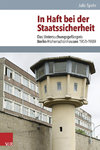
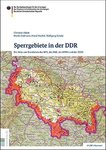
Preise inkl. MwSt.
Kategorien Fremdsprachige Bücher/ english Books / france/ ...
Fremdsprachige Bücher/ english Books/ france/ italiano
|
Artikel-Nr.: 9783869240077
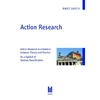
Action Research in a Balance Between Theory and Practice. As a Symbol of German Reunification This enquiry includes German philology, philosophy, psychology, and pedagogy in order to implement improvements by learning, self-discipline, understanding and reflection. This report reveals erosions of personality and family-relationships through infringements of human rights by the State Secret Police in the former East Germany. Through the research and self-directed and practical actions, we can grasp Whitehead's living contradiction. I adopted Tian and Laidlaw's step-by-step guide to complete the five action research-cycle questions. This complex process is illuminated by its historical background, access to Stasi records and picture-footage from Hoheneck Prison. The report seeks after truth, justice, and peace; it holds a mirror up to Germany's past. The text is dedicated to all, but particularly to those who suffered under the GDR regime, and serves both as ethnographic research and as a transparent banner of hope for human wellbeing and world peace.
Anke Jauch, b. Leipzig 1959; arrested 1980; freed 1981; Snatched by the Stasi 2007; lectures; co-author Forgotten Victims of the Wall; research-report in e-Journal (EJOLTS) 2010. |
39,90 €
*
|
|
|
|
|
Artikel-Nr.: 978-3-941772-09-0
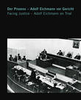
Der Prozess - Adolf Eichmann vor Gericht / Facing Justice - Adolf Eichmann on Trial Vor 50 Jahren, im April 1961, eröffnete das Jerusalemer Bezirksgericht das Verfahren gegen den ehemaligen SS-Obersturmbannführer und Leiter des ›Judenreferats IV B 4‹ im Reichssicherheitshauptamt Adolf Eichmann. Die Verhandlung wurde zu einem großen Medienereignis. Im Licht der Öffentlichkeit stand dabei nicht nur ein Täter des Holocaust. Erstmals erhielten auch die Schilderungen der Opfer weltweite Aufmerksamkeit: In Jerusalem begann die Ära der Zeitzeugen. Das Auftreten Eichmanns vor Gericht wiederum löste Diskussionen um Schuld und Verantwortung Einzelner im nationalsozialistischen System aus. Die Ausstellung widmet sich beiden Aspekten des Verfahrens, dem Bezeugen der Überlebenden und der Strategie des Täters; in ihrem Zentrum steht das Originalfilmmaterial aus dem Gerichtssaal. |
15,00 €
*
|
|
|
|
|
Artikel-Nr.: 9783866808089
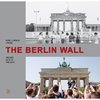
"Lange is one of the few photographers to have dealt with the Wall to any serious degree – a photo collection well worth seeing." Berliner Abendblatt "This visual journey through time along the Wall clearly documents the insanity of it – and the transformation of Berlin reunited." SPIEGEL online
The Berlin Wall lives on to this day, the gashes cut through the city and the concrete remains still bearing witness to the schism inflicted on Berlin from 1961 to 1989. Karl-Ludwig Lange, one of the most well-known photographers of the present, took photographs of the Wall in the seventies and at the time of Reunification in 1990 in a poignant visual record of the wounds that the border fortifications ripped into the city. Fifteen years after the fall of the Wall, Lange began to shoot photographs at the same places for comparison, and has continuously documented the process of change up to the present day. His images show a revival of life in what used to be no man's land, but also those deserted corners that time itself seems to have forgotten. This new revised edition captures new changes from recent years in images previously unpublished – a unique photographic side-by-side comparison between the Wall then and now.
|
19,95 €
*
|
|
|
|

|
Artikel-Nr.: 978-3-922895-22-0
Gerhard Falkner / Reynold Reynolds »Der letzte Tag der Republik / The Last Day of the Republic« basiert auf einem Filmprojekt des amerikanischen Videokünstlers Reynolds Reynolds und des vielfach ausgezeichneten deutschen Schriftstellers Gerhard Falkner (u.a. Kranichsteiner Literaturpreis, Peter-Huchel-Preis, August-Graf-von-Platen-Preis). Beiliegend DVD mit dem Film »The Last Day of the Republic« Dieser Film, der im Buch in zahlreiche Standbilder aufgelöst wird (und der Publikation auf DVD beiliegt), reflektiert den äußerst kontrovers diskutierten und umstrittenen Abriss des 1976 in Ostberlin eröffneten Palasts der Republik – damals Sitz der Volkskammer und Wahrzeichen der DDR, heute Zeugnis und Symbol eines untergegangenen Staates. Reynolds raffiniert geschnittenes filmisches Abbruch-Ballett zeigt an urzeitliche Echsen erinnernde Kräne und Bagger, die sich unter grotesken Verrenkungen und mit fast schon slapstickhafter Geschwindigkeit in die Mauern des einstigen Repräsentationsbaus der DDR fressen. So wie der Palast der Republik in Reynolds Film Schicht für Schicht abgetragen wird, so gräbt der Lyriker Gerhard Falkner in seinem zu diesem Film entstandenen Gedicht in der Vergangenheit und schlägt mit einprägsamen Bildern den Bogen von der Gegenwart bis in die Antike. »Es wird bleiben ein Loch in der Luft, so groß wie ein Schloss«: Reynolds Filmstills und Falkners Gedicht sind von düsterer Schönheit und legen gleichzeitig Zeugnis ab von der offensichtlichen Hilflosigkeit beim Umgang mit der jüngeren deutschen Geschichte. Diese ist auch Thema eines ausführlichen Essays des Architekturkritikers Moritz Holfelder (u. a. Süddeutsche Zeitung, Bayerischer Rundfunk) über die Planung, den Bau, die Funktion und das unrühmliche Ende des Palast der Republik. |
24,00 €
*
|
|
|
|
|
Artikel-Nr.: 978-3-86153-613-0
Nach dem Ende des Zweiten Weltkrieges wurde Berlin zum Zankapfel zwischen den einstigen Verbündeten USA, Großbritannien, Frankreich und der Sowjetunion. Der Bau der Mauer im August 1961 zementierte vor aller Welt die Teilung Berlins, die bereits 1945 mit der Aufteilung in vier Sektoren begonnen hatte und die bis zur Deutschen Einheit im Jahr 1990 fortbestehen sollte. Mehr als vier Jahrzehnte standen sich in Berlin so nah wie nirgendwo sonst die feindlichen Systeme von Ost und West gegenüber und ließen die geteilte Stadt zum Symbol des Kalten Krieges werden. Oliver Boyn zeigt, wo damals die politischen Entscheidungsträger agierten und wo Spione ausgetauscht wurden, wo die Mauer verlief und wo die Propagandazentralen waren, wo Ehrenmale entstanden und welche Gedenkstätten heute an diese Zeit erinnern. Illustriert werden die Texte zur historischen Bedeutung dieser Orte und ihrer heutigen Nutzung durch 160 historische und aktuelle Fotos.
|
13,00 €
*
|
|
|
|
||
|
Artikel-Nr.: 9783942831086
A complete record of all the lectures FALLING WALLS / DOCUMENTATION The International Conference on Future Breakthroughs in Science and Society. Welche Mauern fallen als nächste und wie werden sie unser Leben verändern? Diese Fragen beantworten renommierte Wissenschaftler aus aller Welt bei der Falling Walls Conference, die jährlich am 9. November zum Jahrestag des Mauerfalls in Berlin stattfindet. Der englischsprachige Dokumentationsband versammelt erstmals die Manuskripte der 15-minütigen Kurzvorträge und liefert damit einen kompakten Ausschnitt über den Stand der Spitzenforschung weltweit. Mehr als 40 Experten aus Geistes- und Naturwissenschaften, Life Sciences, Wirtschaft und Technologie berichten, an welchen Durchbrüchen sie arbeiten, und zeigen Lösungswege für drängende Fragen der Gegenwart auf: Wie kann Aids besiegt werden? Was kann der Westen von der Innovationskultur Chinas lernen? Wie gelingt es, Produktion und Logistik pünktlicher und umweltfreundlicher zu gestalten? Wie kann Armut bekämpft werden? Welche Alternativen setzen wir der Endlichkeit fossiler Energieressourcen entgegen? Wie schaffen wir Verständnis zwischen den Weltreligionen? Wie kann die Strahlung von radioaktivem Abfall auf ein Minimum reduziert werden? Die Dokumentation kann von zwei Seiten gelesen werden: von vorne als anspruchsvolle Aufsatzsammlung und von der anderen Seite aufgeschlagen als kurzweiliger Bildband mit Stimmen von Presse und Teilnehmern.
Which walls will be the next to fall - and how will they alter our lives? Leading academics from all over the world answer these questions at the Falling Walls Conference that is held in Berlin on November 9 every year, the anniversary of the fall of the Wall. For the first time, this volume in English brings together the manuscripts of the 15-minute mini lectures and thus provides a concise snapshot of the status of leading research throughout the world. More than 40 experts from science and the arts, life sciences, economics and technology report on the breakthroughs on which they are currently working and reveal ways of solving the urgent questions of the present: How can Aids be defeated? How can the West learn from China's culture of innovation? How is it possible to organize production and logistics in a more timely and environmentally friendly way? How can poverty be fought? What alternatives are available to counterbalance the exhaustion of fossil fuel resources? How can we create understanding between world religions? How can the radiation from radioactive waste be kept to a minimum? The volume can be read in two different ways: from front to back, as a thought-provoking collection of essays, or as a fascinating illustrated book to dip into that includes opinions from the press and participants. |
19,89 €
*
|
|
|
|
20 Years since the Fall of the Berlin Wall Transitions, State Break-Up and Democratic Politics in Ce20 Years since the Fall of the Berlin Wall: Transitions, State Break-Up and Democratic Politics in Central Europe and Germany On 9 November 1989, the Berlin Wall was opened, signalling the beginning
of the end of the communist regimes in Central and Eastern Europe. By
1990, free elections had been held in most countries in the region.
Forty – in some cases fifty – years of communism had come to an end.
However, the ‘revolutions’ of 1989 were not uniform processes: the
starting points were different, the trajectories were different – and
outside Central Europe even the outcomes of the transitions from
communism were different. The fall of communism also caused the Soviet
empire to crumble, and the Soviet Union itself fell apart in December
1991 – as did Czechoslovakia in 1993, and Yugoslavia in a gradual
process that was to last from 1991 to 2008. This book originated in a
conference held in Oslo 11–13 November 2009, arranged by the E.ON
Ruhrgas scholarship programme for political science, and commemorating
the 20th anniversary of the ‘revolutions’ in Central and Eastern Europe.
The 16 chapters take stock of developments after 1989, with special
emphasis on the causes and effects of the transitions, including the
processes of state unification and separation that followed in the wake
of the ‘revolutions’. The book is divided into four main parts: regime
transitions from communism; state unification and separation; party
system continuity and change since 1989 (in Germany, the Czech Republic,
Hungary, and Poland); and on the effects of German unification on
external and internal German relations. The geographical scope thus
varies from chapter to chapter, but the main emphasis is on Germany and
its closest Central European neighbours. |
39,00 €
*
|
|
|
|
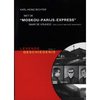
Artikel-Nr.: 9783000371448
Met de Moskou-Parijs-Express naar de vrijheidKarl H. Richter EEN VLUCHT VAN OOST NAAR WEST. LEVENDE GESCHIEDENIS DEEL 1 |
11,70 €
*
|
|
|
|
|
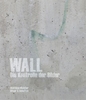
Artikel-Nr.: 9783940029362
Matthias Melster & Oliver S. Scholten Wall - Die Kontrolle der Bilder Deutsch/English Liebes wiedervereinigtes Deutschland, 40 Jahre musstest du zittern, Hetze auf beiden Seiten des eisernen Vorhangs ertragen, hast Pershing-Raketen kommen und den Warschauer-Pakt gehen sehen. Dann kam “Wir sind das Volk” und Vieles wurde gut. Nun fast eine Generation später blicken wir mit WALL - DIE KONTROLLE DER BILDER zurück auf den Kontrollapparat des ostdeutschen Staates, gehen in die MfS-Untersuchungshaftanstalt Hohenschönhausen, wo der Autor selbst einsaß. Ein Stück Geschichte, ehrlich und emotional! Wer die Bilder kontrolliert, kontrolliert die Erinnerung. Und wer die Erinnerung kontrolliert, kontrolliert die Vergangenheit. (Blade Runner) Wer die Bilder kontrolliert, kontrolliert die Hoffnung. Und wer die Hoffnung kontrolliert, kontrolliert die Zukunft. (O.S. Scholten Ein Foto-Kunst-Buch zum 20. Jahrestag des Mauerfalls. Zwei Foto-Künstler verarbeiten Erinnerungen, auf völlig verschiedene Art und Weise. So sind die Bilder von Matthias Melster von der Handlung des Fotografierenden und vom Inhalt mehr, als lediglich informativ aufgearbeitete und abgelichtete Geschichte. Matthias Melster setzt sich mit seiner ganz persönlichen, zerstörerischen Erinnerung an die psychische Folter bei der Stasi auseinander. Indem er die Orte seines Traumas auf seine ganz besondere Art und Weise fotografiert, und indem er den Dingen durch seine Bilder ihre Macht nimmt. Oliver S. Scholten dagegen zerstört tote Erinnerungen, um die entstandenen Fragmente zu neuen Bildern zusammenzusetzen. In einer Art Medienarchäologie werden Geschichten quasi bruchstückhaft (re)konstruiert. Aus den restlichen Fragmenten errichtet er einen Wall der Erinnerung, gegen die Bilderflut des 21. Jahrhunderts. |
10,00 €
*
|
|
|
|
|
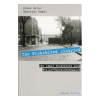
Artikel-Nr.: 9783897735842
Gedenkstätte Berlin-Hohenschönhausen The Stasi Restricted Area Berlin-Hohenschönhausen. Ed. by Stiftung Gedenkstätte Berlin-Hohenschönhausen — von Peter Erler, Hubertus Knabe Wie kein anderer Ort in Berlin erinnert die Gedenkstätte Berlin-Hohenschönhausen an die Ausmaße von Terror und Unterdrückung in der DDR. Die Gedenkstätte entstand an einem Ort, der auf keinem Stadtplan der DDR verzeichnet war. Er gehörte zu einem hermetisch abgeriegelten und strengstens überwachten Gebiet, in dem sich ab 1951 die zentrale Untersuchungshaftanstalt der Staatssicherheit befand. Zuvor hatten hier die sowjetischen Besatzer zunächst ein Lager, später ein Untersuchungsgefängnis unterhalten. |
12,00 €
*
|
|
|
|
Preise inkl. MwSt.
| 1 - 10 von 41 Ergebnissen |
|